PROJECT PROFILE
The Westminster Schools Tunnel Transformation
Westminster Schools – Atlanta, GA
Miller EG Design | Experiential Wayfinding and Environmental Graphic Design

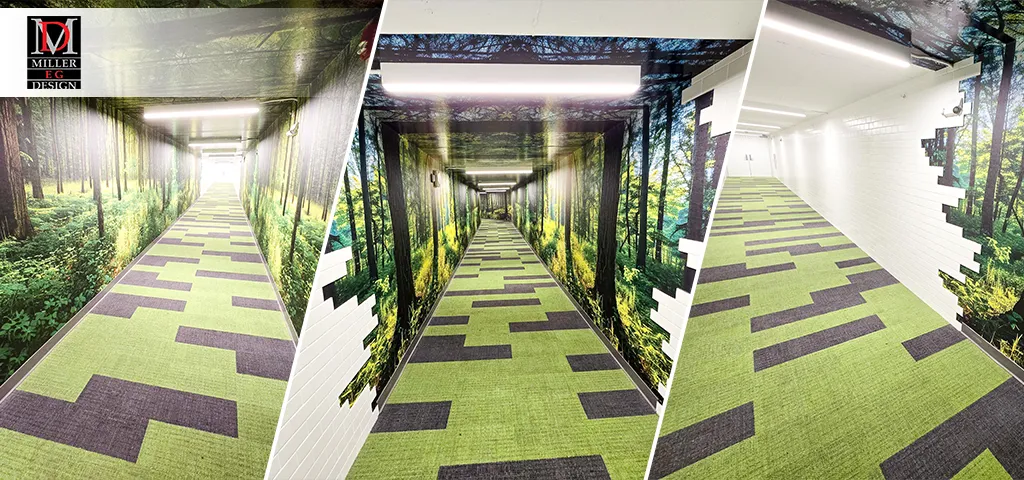
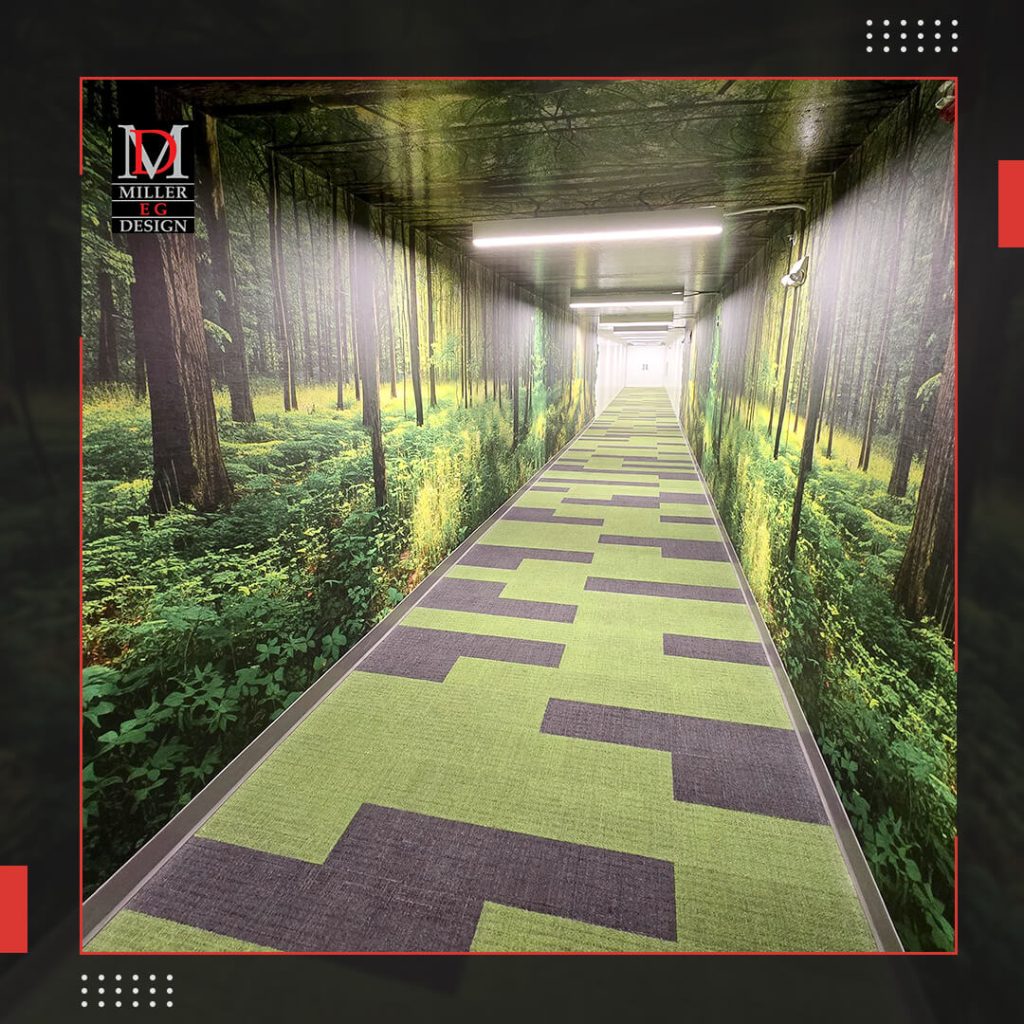
The Westminster Schools Tunnel project is a compelling example of experiential wayfinding—one that transcends traditional signage to transform a once sterile and intimidating underground passage into an engaging, multi-sensory experience. Spearheaded by Miller EG Design, this 200-foot subterranean corridor connects separate academic buildings on the Westminster campus in Atlanta, Georgia.
Once perceived as “boring, off-putting, and even a little scary,” the tunnel has been reimagined as a nature-inspired, emotionally resonant passage that now fosters safety, delight, and a sense of discovery.
Client Objective
Westminster Schools sought to address a core challenge: students and staff needed a safe and accessible way to travel between campus buildings without crossing busy streets. While the tunnel served this functional purpose, its blank white walls, dim lighting, and curved layout created psychological discomfort and disorientation.
Miller EG Design was brought in not to alter the tunnel’s structure, but to reimagine the user experience within it. The mission was to use environmental graphics and sensory cues to transform a utilitarian space into a narrative journey—a place that was not only safe, but uplifting and memorable.
Design Concept: Bringing the Outside In
Thematic Inspiration
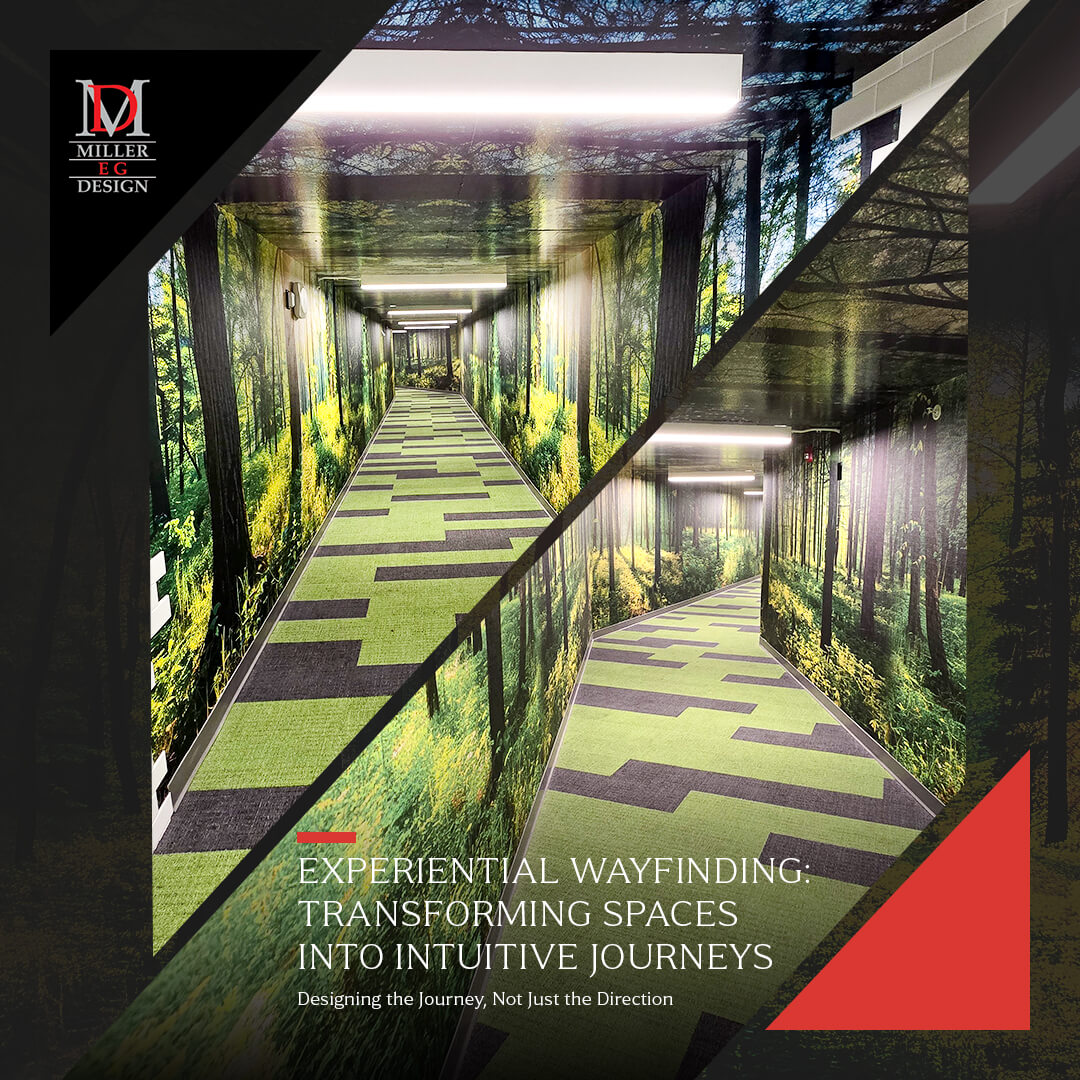
The driving creative vision behind the project was to simulate a natural landscape underground—"bringing the outside in." Drawing on research around biophilic design, the team introduced a lush visual language inspired by forests and green space. Green, as a dominant color, was selected for its positive physiological and psychological effects, reinforcing feelings of calm, vitality, and well-being.
Visual Environment
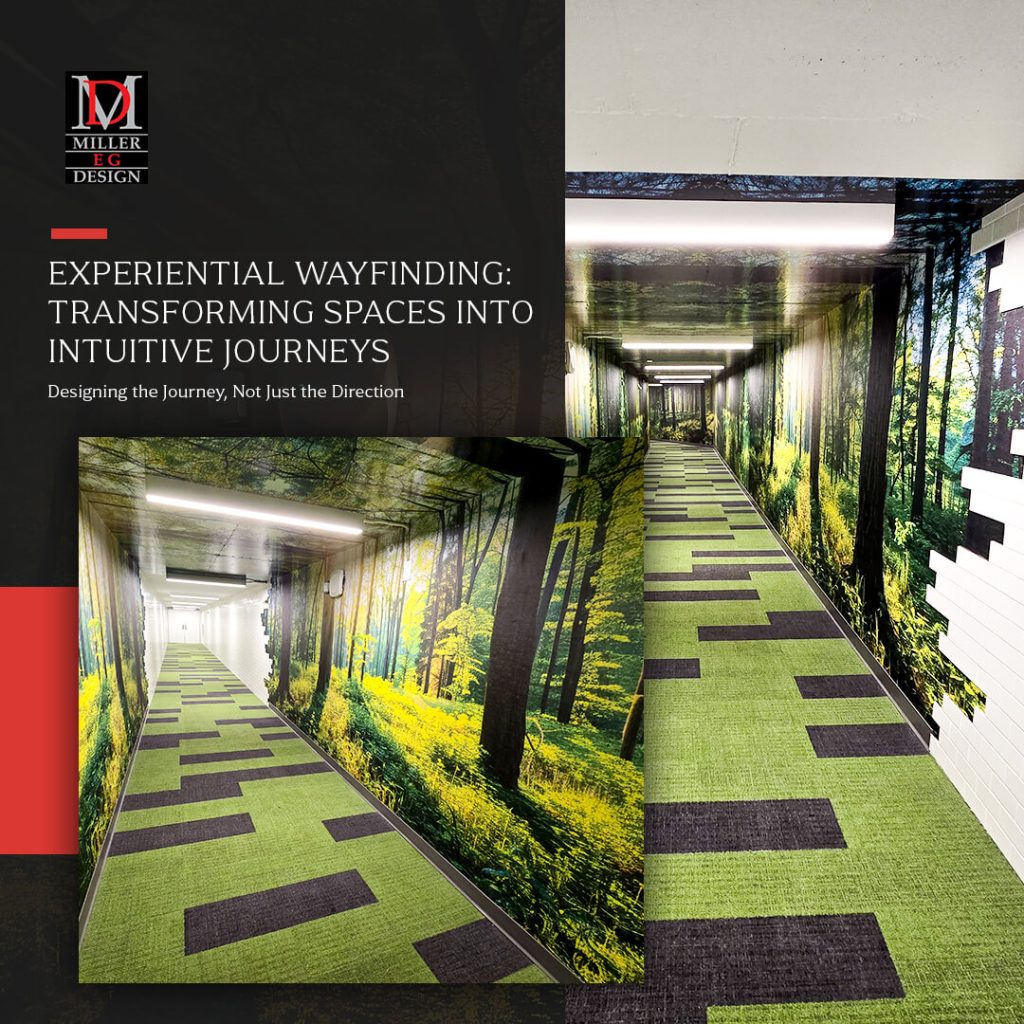
The tunnel walls were wrapped with a custom supergraphic—an immersive mural featuring dense foliage, forest pathways, and dynamic lighting simulations. The curvature of the tunnel was leveraged to guides students between two campus buildings.
Soundscape Integration
In a bold move that elevated the space beyond graphic design into full experiential placemaking, Miller EG Design incorporated a synchronized soundscape. Triggered by motion sensors, a curated audio experience featuring bird calls and ambient forest sounds plays as users walk through the tunnel. The speakers, paired with high-quality audio files sourced specifically for this application, were strategically installed to match the tunnel’s pacing. This multi-sensory layering enhances orientation and emotional engagement, and subtly encourages continued movement toward the tunnel’s exit.
“We wanted the experience to feel like a peaceful afternoon walk through nature—you’re in a tunnel, but you might not even realize it,”
— Tim Miller, Miller EG Design
Experiential Wayfinding in Action
Unlike traditional wayfinding that relies on arrows and maps, this project reframes the practice as experiential guidance. The space itself becomes the signpost. There is no ambiguity: the tunnel leads you forward, and every environmental element—color, imagery, sound—reinforces a sense of safe, directional momentum. This aligns with Miller EG Design’s ethos of "Better Wayfinding through Experiential Graphics"—an approach that blends functional navigation with storytelling and emotional resonance.
Collaboration & Process
Material & Technical Specifications
- Supergraphic Wall Covering: High-resolution, UV-protected vinyl wrap with anti-graffiti coating
- Audio System: Motion-triggered playback using discreet sensors and weather-resistant speakers
- Lighting Integration: Tuned to complement natural imagery and reduce harsh shadows
- Maintenance Plan: Quarterly inspection and cleaning schedule, audio system diagnostics
Outcomes & Community Impact
- Improved Perception of Safety: The tunnel no longer feels claustrophobic or intimidating.
- Enhanced Sense of Place: The space now reflects Westminster’s commitment to innovation, wellness, and student experience.
- Engagement & Positive Feedback: Early feedback from faculty and visitors has been enthusiastic, with particular praise for the unique integration of sound.
Strategic Significance
- Experiential Wayfinding
- Biophilic Design
- Narrative Environmental Graphics
- Multi-sensory Placemaking
- Student-Centered Design
- Upcoming Award Submissions
- 2026 Press Release (post-opening)
- Marketing Newsletter Feature
- Experiential Design White Paper: “Better Wayfinding Through Nature”