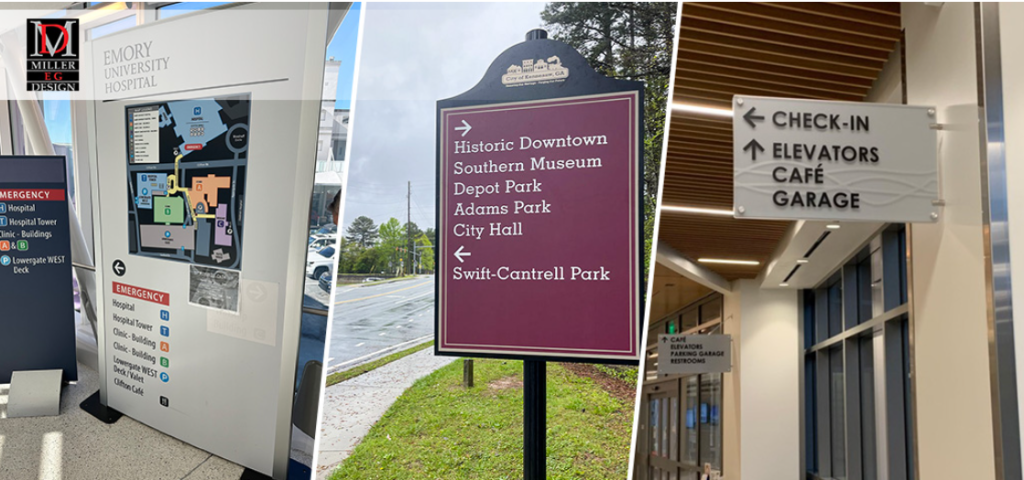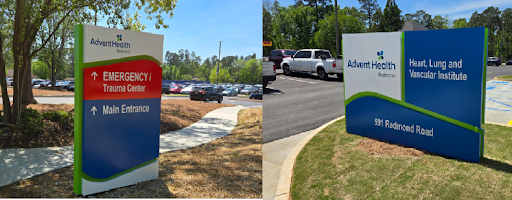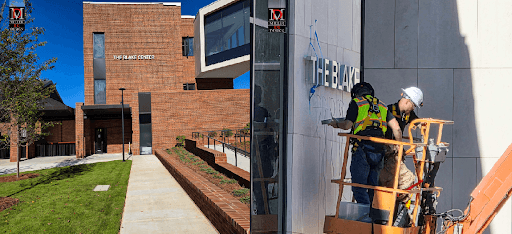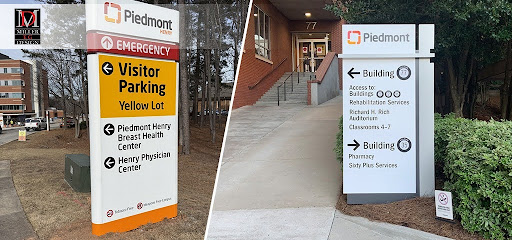
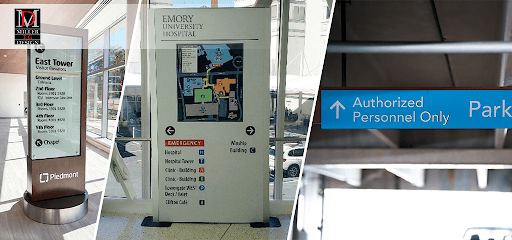
Walking into an unfamiliar facility should not feel like solving a puzzle. Whether someone is visiting a hospital, looking for an office, finding a classroom, or trying to locate a department in a large public building, they need clear information at the right moments. Smart wayfinding systems are designed to provide that information while making the overall environment easier to understand.
Modern wayfinding goes beyond putting up directional signs. It combines signage, facility maps, environmental graphics, typography, color, symbols, architectural cues, and sometimes interactive technology to create a connected navigation experience. When these elements work together, visitors can make decisions more naturally instead of stopping repeatedly to figure out where they should go.
Creating a Clearer Visitor Journey
One of the biggest advantages of a smart wayfinding system is that it considers the entire journey rather than individual signs. A person may begin in a parking lot, move toward an entrance, find a lobby, locate an elevator, and then continue toward a specific department or room.
Each stage presents an opportunity to provide useful information.
Instead of overwhelming visitors with a large amount of information in one location, an effective system guides important decision points. Exterior identification can establish where someone should enter. Directories can explain the overall layout. Directional signs can provide the next step, while room identification and destination signs confirm that visitors have arrived where they need to be.
This sequence makes navigation feel more intuitive because people receive information when they actually need it.
Making Complex Facilities Less Confusing
Large facilities naturally present more navigation challenges. Hospitals may have multiple buildings, departments, entrances, parking areas, and floors. Schools and universities can include numerous buildings connected by walkways and corridors. Corporate campuses, government facilities, and mixed-use developments can have their own complicated circulation patterns.
A smart wayfinding strategy helps organize these environments into understandable zones and routes.
Facility maps can play an important role by giving visitors a visual overview of the property. At the same time, directional signage helps people follow their selected route. When maps and signs use consistent terminology, symbols, colors, and visual language, visitors do not have to interpret a different system at every turn.
Supporting Accessibility and Different Users
Not everyone experiences a facility in the same way. Visitors may have different mobility, vision, language, or cognitive needs, so wayfinding should be considered from a broad user perspective.
Readable typography, appropriate sign placement, recognizable symbols, tactile information, and thoughtful visual contrast can all contribute to a more accessible navigation system. Accessibility should not be treated as something added after the design is finished. It should be considered while the system is being planned.
This user-centered approach can make a facility easier to understand for a wider range of people while helping organizations address applicable codes, regulations, and accessibility requirements.
Connecting Wayfinding With the Environment
Smart wayfinding does not have to look institutional or disconnected from the architecture. In fact, signage and graphics can become an important part of the character of a facility.
Experiential graphics allow organizations to incorporate branding, colors, imagery, textures, architectural features, and storytelling into navigation. A healthcare facility might use calming graphics to create a more welcoming environment. A school can incorporate its identity into campus navigation. A corporate facility can reinforce its brand through coordinated signage and environmental graphics.
At Miller EG Design, we approach wayfinding as an integrated experience. Our work includes wayfinding consultation, custom signage development and management, experiential graphics, facility maps, code compliance, variance applications, and highway signage. We design solutions around the environment rather than treating signs as isolated objects.
Why Planning Matters
The most effective wayfinding systems are planned before signage becomes an afterthought. We begin by considering how people move through a facility, where confusion is likely to occur, which destinations matter most, and what information visitors need at each decision point.
That planning can help create consistency from the parking area through the building and to the final destination. It can also make future changes easier because the facility has an established visual and navigational framework.
For organizations considering a new development, renovation, expansion, or signage improvement, incorporating wayfinding early can help connect architecture, branding, accessibility, and visitor experience into one cohesive system.
Better Wayfinding Starts With Understanding People
Ultimately, smart wayfinding is about people. The goal is not simply to install more signs. It is to create an environment where visitors can understand their surroundings, make decisions, and reach their destinations with less uncertainty. Our approach at Miller EG Design combines design expertise, experiential graphics, signage, maps, and implementation to help complex environments become clearer and more intuitive. We provide wayfinding services in Nashville and surrounding Metro Atlanta areas, working with healthcare facilities, educational institutions, corporate environments, government facilities, municipalities, and other organizations. Miller EG Design, located at 315 Northpoint Pkwy SE, Suite F, Acworth, GA 30102, is ready to help you create a wayfinding system that supports both your facility and the people who use it. Call us at (404) 947-6448 to discuss your project.