Walking into an unfamiliar building should not feel like solving a puzzle. Whether someone is visiting a healthcare facility, navigating a corporate campus, finding a classroom, or looking for a department in a large public building, they need to understand where they are and where to go next.
That is where effective wayfinding design makes a difference. Great wayfinding is not simply about adding more signs. It is about creating a connected system of visual information that helps people move through an environment naturally, confidently, and with less confusion.
At Miller EG Design, we approach wayfinding as an experience. Our work combines signage, facility maps, environmental graphics, and strategic planning to make complex spaces easier to understand.
1. Clear and Easy-to-Understand Information
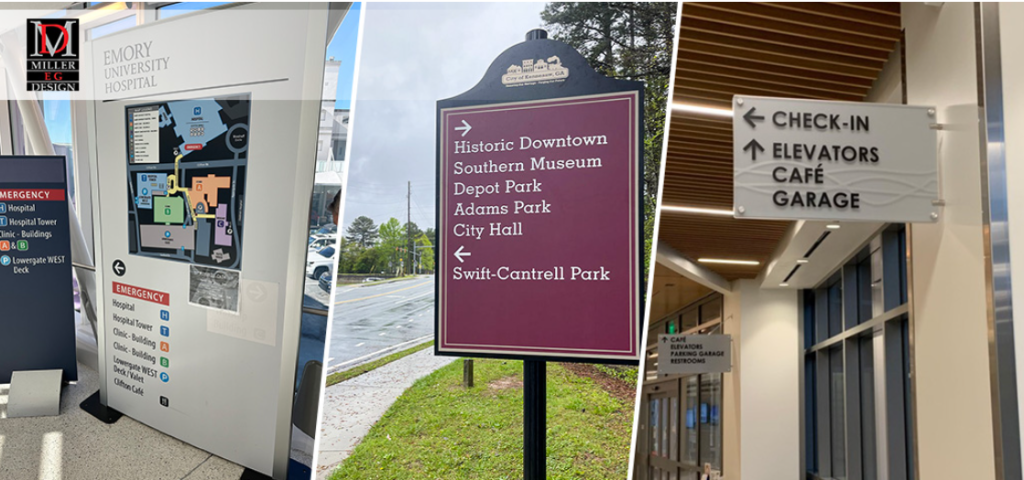
The first requirement of great wayfinding is clarity. Visitors should be able to understand a sign quickly without stopping to study it.
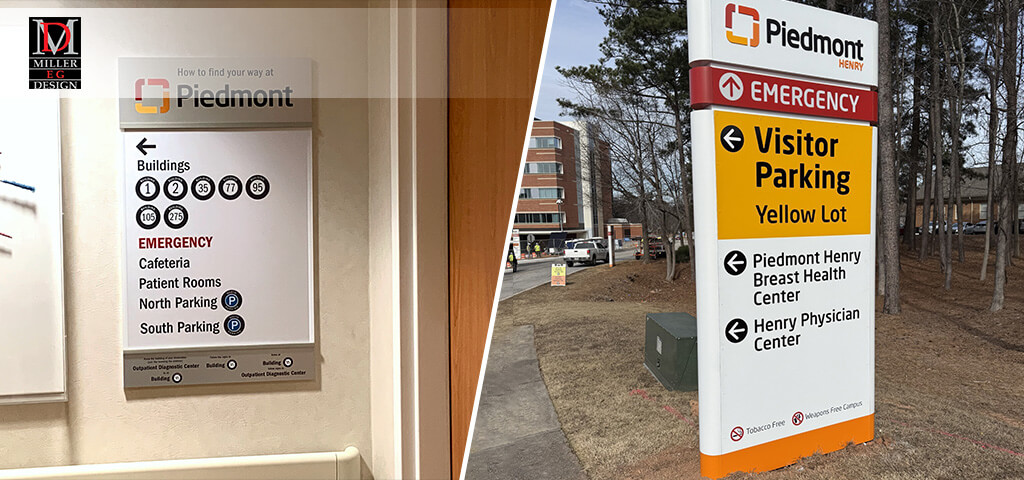
This means using straightforward language, readable typography, recognizable symbols, and directional information that is easy to interpret. A sign should answer the question a visitor is asking at that moment: Where am I? Where do I need to go? Which direction should I take?
Too much information can be just as problematic as too little. Effective wayfinding provides the right information at the right time.
2. Consistency Throughout the Environment
Imagine entering a building where every sign uses a different font, color, symbol, or terminology. Even if each individual sign is accurate, the overall system could feel confusing.
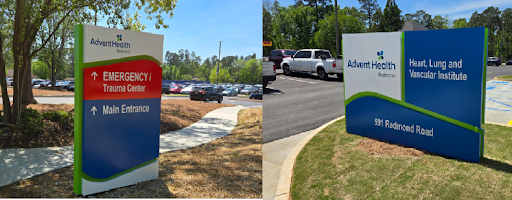
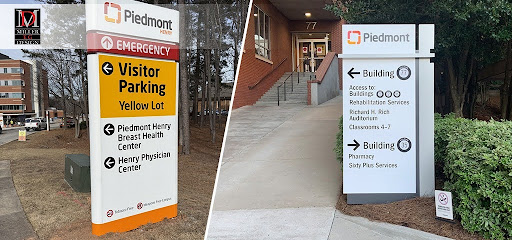
Consistency helps visitors recognize that different signs are part of the same navigation system. Typography, colors, arrows, symbols, terminology, and sign placement should work together.
We consider this connected visual language an important part of experiential graphics. When signage and environmental graphics are coordinated with a facility’s architecture and brand, navigation can feel much more natural while also contributing to the character of the space.
3. Strategic Placement at Decision Points
A well-designed sign does not help much if someone sees it after they have already made the wrong turn.
Great wayfinding considers where people need information before they reach important decision points. Entrances, intersections, elevators, stairways, parking areas, hallways, and major destinations can all require different types of visual guidance.
This is why wayfinding planning should begin with understanding how people actually move through a space. We look at traffic flow, destinations, visibility, and the relationship between different areas rather than simply deciding where signs might look attractive.
4. Facility Maps That Provide Orientation
Directional signs help people move from one point to another, but facility maps can provide something more: context.
A good map allows visitors to understand where they are in relation to departments, entrances, elevators, restrooms, exits, and other important destinations. For larger facilities, maps can also help users understand both horizontal and vertical travel throughout the building.
We design facility maps around the unique characteristics of each environment. Because facilities can change over time, we also consider how maps can be revised and expanded as spaces develop.
5. Accessibility and Inclusive Communication
Wayfinding should work for as many people as possible. Readability, contrast, sign placement, symbols, tactile information, and other accessibility considerations can influence whether visitors can navigate comfortably.
Accessibility should be part of the planning process rather than something added at the end. When designers consider different users from the beginning, the result can be a more welcoming and functional environment for everyone.
6. A Strong Connection to the Space and Brand
Wayfinding signs have a practical job, but they do not have to look disconnected from their surroundings.
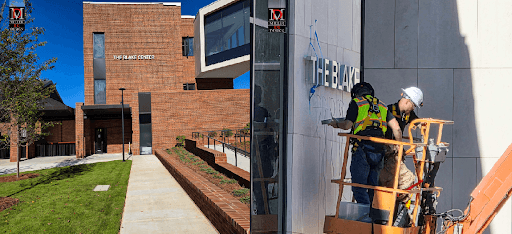
Colors, materials, graphics, typography, and other design elements can reinforce an organization’s identity while helping people navigate. This is where experiential graphic design becomes particularly valuable. Instead of treating signage as an afterthought, it can become part of the overall environment.
At Miller EG Design, we specialize in creating experiential graphics and signage programs based on wayfinding information. Our services include wayfinding consultation, custom signage, exterior and interior signs, facility maps, corporate identification, code compliance, and related implementation services. With roots dating back to 1988, we bring decades of experience to projects involving healthcare, education, corporate, hospitality, retail, civic, transportation, and other complex environments.
Ultimately, great wayfinding design is about helping people feel confident in the spaces they use. Clear information, consistent visual language, strategic sign placement, useful maps, accessibility, and thoughtful environmental integration all work together to create a better experience. For organizations looking for wayfinding design in Atlanta, GA. We at Miller EG Design can help develop a navigation system tailored to your environment. Located at 315 Northpoint Pkwy SE Suite F, Acworth, GA 30102, we provide wayfinding, signage, facility maps, and experiential graphic solutions. Contact us at (404) 947-6448 to discuss your project.