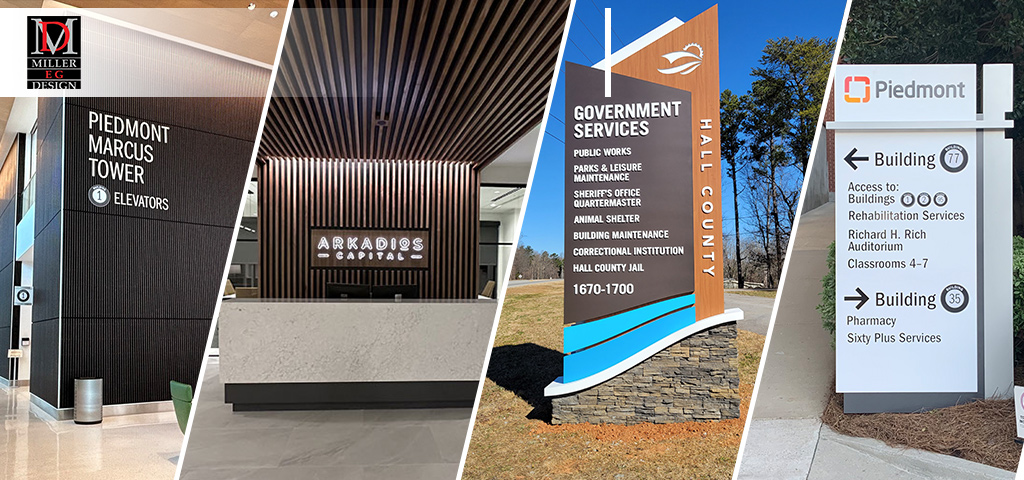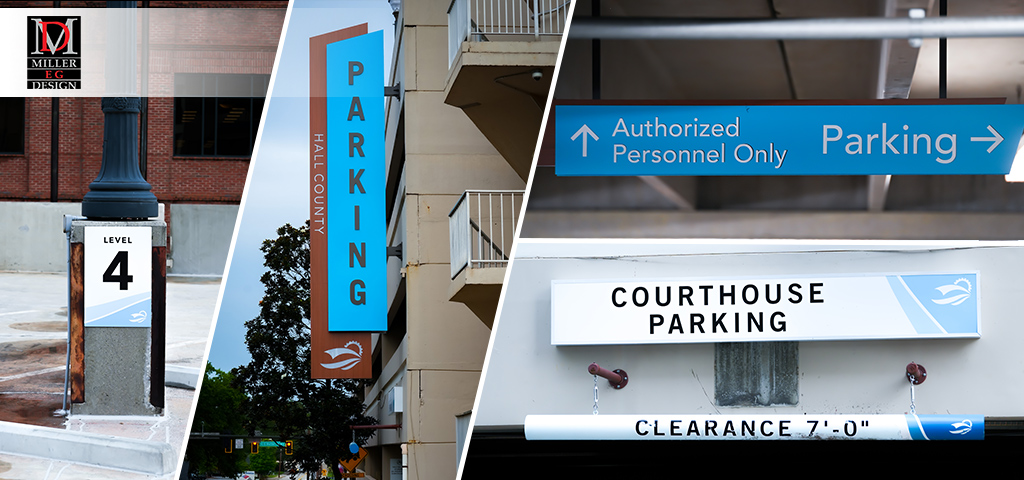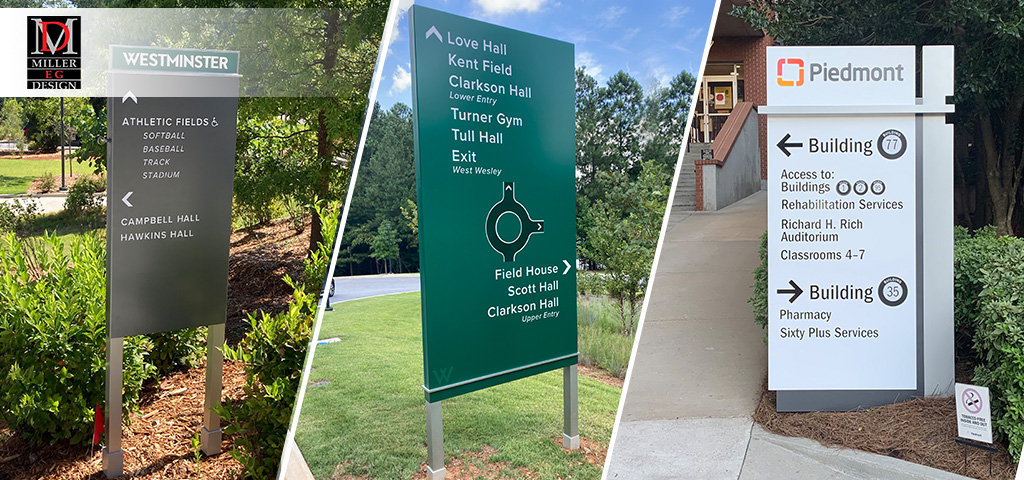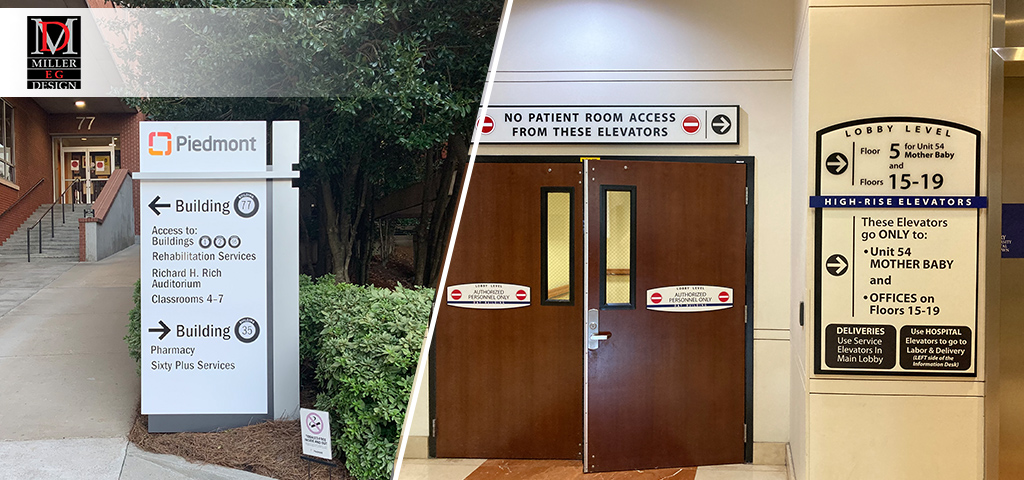

Walking into an unfamiliar building should not feel like solving a puzzle. Yet visitors can still become confused in hospitals, corporate offices, educational campuses, retail centers, and public facilities even when signs appear throughout the property.
So, why does this happen?
The answer is simple: effective wayfinding is not about having more signs. It is about creating a connected navigation system that gives people the right information at the right time. At Miller EG Design, we understand that signage works best when it is part of a larger strategy focused on how people actually experience and move through a space.
More Signs Do Not Always Mean Better Navigation
It can be tempting to assume that adding another directional sign will solve a navigation problem. But too many signs can actually make a space more confusing.
When visitors encounter multiple messages, arrows, room numbers, directories, advertisements, regulatory signs, and branding elements at once, they may struggle to determine which information matters most.
Good wayfinding establishes a visual hierarchy. Major destinations should be identified first, followed by more specific information as visitors move closer to their destination. This progressive approach helps people process information without becoming overwhelmed.
Signs May Be in the Wrong Places
Even a beautifully designed sign is ineffective if visitors do not see it when they need it.
Wayfinding should account for the natural movement of people through a property. Signs should be positioned around important decision points—such as entrances, intersections, elevators, hallways, parking areas, and building transitions.
Visitors should not have to walk past an intersection and then wonder whether they made the correct turn. Directional information needs to appear before or at the moment a decision must be made.
This is why professional wayfinding begins with understanding traffic patterns, user behavior, visibility, and the physical environment rather than simply choosing where signs look attractive.
Inconsistent Design Creates Uncertainty
Imagine seeing one sign that uses blue arrows and another that uses green arrows. Then imagine different fonts, symbols, terminology, and layouts throughout the same facility.
Even if every individual sign is technically correct, the overall system can feel unreliable.
Consistency helps visitors recognize that different signs belong to the same navigation system. Typography, colors, symbols, terminology, and directional conventions should work together throughout the environment.
We approach wayfinding as a complete experience, helping create visual consistency across signs, maps, graphics, and other environmental elements.
Visitors Need More Than Directions
Effective wayfinding is also about orientation.
A visitor needs to understand not only where to go, but also where they are. Facility maps, directories, landmarks, color coding, symbols, and architectural cues can help people build a mental picture of their surroundings.
For large or complicated properties, facility maps can provide another important layer of information. Instead of forcing visitors to rely entirely on directional signs, maps can help them understand the larger layout and plan their route.
Accessibility Should Be Part of the Strategy
A navigation system should work for as many people as possible.
Legibility, contrast, tactile information, Braille, appropriate placement, and clear visual communication can make signage easier to understand and use. Accessibility should not be treated as an afterthought—it should be incorporated into the planning and design process.
For healthcare facilities, schools, corporate environments, transportation facilities, and public spaces, thoughtful wayfinding can help create a more welcoming and inclusive experience.
Better Wayfinding Starts With Understanding People
Ultimately, visitors get lost because wayfinding systems are sometimes designed around where signs can be installed rather than how people actually navigate.
At Miller EG Design, we take a user-focused approach to wayfinding. We provide wayfinding consultation, experiential graphics, exterior and interior signs, facility maps, corporate identification, fabrication, installation, and maintenance. With roots dating back to 1988, we bring decades of experience to environments including healthcare, education, corporate, retail, hospitality, civic, transportation, and other complex spaces.
For organizations looking for wayfinding design in Atlanta, GA, and greater Metro Atlanta, we at Miller EG Design are ready to help create clearer, more intuitive visitor journeys. Located at 315 Northpoint Pkwy SE, Suite F, Acworth, GA 30102, we can be reached at (404) 947-6448 to discuss your signage and wayfinding needs.