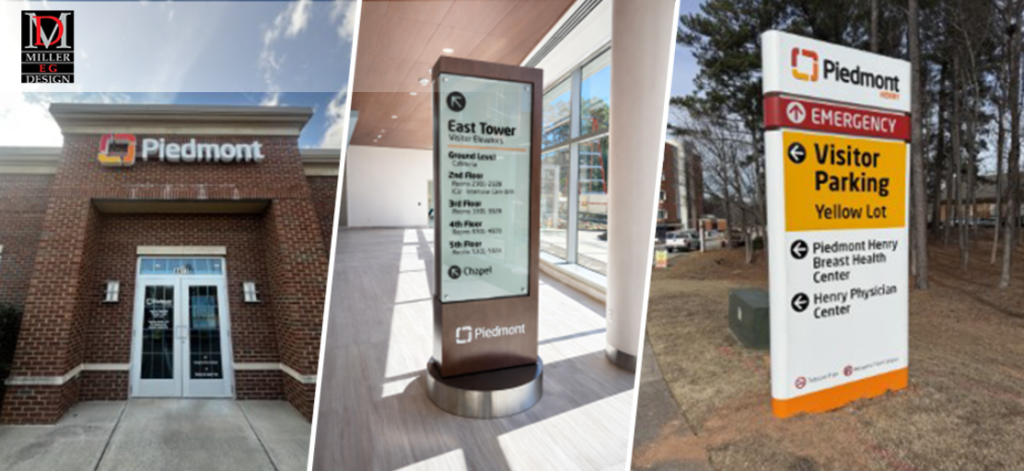
Getting lost is more than an inconvenience—it’s a breakdown in experience. Whether someone is navigating a healthcare campus, corporate headquarters, educational facility, or mixed-use environment, confusion creates stress, delays, and frustration. The good news? Complex spaces don’t have to feel complicated. With thoughtful wayfinding design, they can become clear, intuitive journeys that guide people effortlessly from point A to point B.
At Miller EG Design, we believe wayfinding is not just signage—it’s a strategic system that blends design, psychology, and spatial awareness to help people move confidently through environments of any size or complexity.
Why Wayfinding Design Matters in Complex Environments
Large or multi-use spaces often grow organically over time. New wings are added, departments shift, and layouts become harder to understand. Without a cohesive wayfinding strategy, visitors rely on guesswork, staff interruptions increase, and brand perception suffers.
Effective wayfinding design simplifies these environments by creating visual cues that align with how people naturally process information. Clear pathways, consistent messaging, and logical hierarchies reduce cognitive load and make navigation feel effortless. The result is a space that works with people, not against them.
Start with a User-Centered Wayfinding Strategy
The foundation of successful wayfinding begins with understanding users. Different audiences have different needs—first-time visitors, employees, patients, students, or vendors all navigate spaces differently. A user-centered approach evaluates how people enter, move through, and exit a facility.
This process includes identifying decision points, high-traffic areas, and common pain points. When wayfinding design is built around real movement patterns rather than floor plans alone, navigation becomes intuitive instead of instructional.
Create Visual Hierarchy to Reduce Confusion
One of the most powerful tools in wayfinding design is visual hierarchy. Not all information is equal, and effective systems make that clear instantly. Primary destinations should stand out first, followed by secondary and tertiary information.
Typography, color, scale, and placement all play critical roles. Consistent fonts and color coding help users recognize patterns quickly, while proper spacing ensures information is readable at a glance. A strong hierarchy allows people to process directions subconsciously as they move.
Integrate Architecture, Branding, and Signage
Wayfinding works best when it’s integrated into the environment rather than applied as an afterthought. Architectural features such as lighting, flooring changes, and sightlines can subtly guide movement. When combined with branded signage, wayfinding reinforces identity while improving navigation.
At Miller EG Design, we align wayfinding systems with brand standards to ensure consistency across physical spaces. This creates environments that feel intentional, professional, and easy to understand—while strengthening brand recognition at every turn.
Use Simplicity and Consistency Across the System
Clarity comes from consistency. Using the same terminology, icons, and directional logic throughout a space eliminates uncertainty. When names change, or styles vary, users second-guess themselves—even when they’re heading in the right direction.
Simple language, universally understood symbols, and predictable layouts help users move confidently without stopping to analyze every sign. Good wayfinding doesn’t draw attention to itself—it quietly does its job.
Design for Accessibility and Inclusivity
Modern wayfinding design must account for accessibility from the start. This includes readable typography, proper contrast, tactile elements, and placement that accommodates all users. Inclusive design ensures everyone can navigate a space independently and with dignity.
By meeting accessibility standards while maintaining strong visual design, wayfinding systems become both functional and welcoming.
Wayfinding Design That Evolves with Your Space
Complex spaces are rarely static. A flexible wayfinding system allows for future updates without starting from scratch. Modular signage, adaptable messaging, and scalable design ensure long-term value as spaces grow and change.
Miller EG Design specializes in creating wayfinding systems that are both durable and adaptable—supporting organizations today while planning for tomorrow.
Serving Acworth, GA, and Surrounding Areas with Expert Wayfinding Design
If you’re looking for professional Acworth, GA Wayfinding Design, Miller EG Design delivers strategic solutions that transform complex environments into simple, intuitive journeys. Learn more about our local expertise on our Acworth wayfinding design page:
https://milleregdesign.com/acworth-ga-wayfinding-design/
Miller EG Design is located at 315 Northpoint Parkway SE, Suite F, Acworth, GA 30102. To discuss how we can improve navigation and user experience in your space, contact us at (404) 947-6448. Let’s design clarity into every step.