
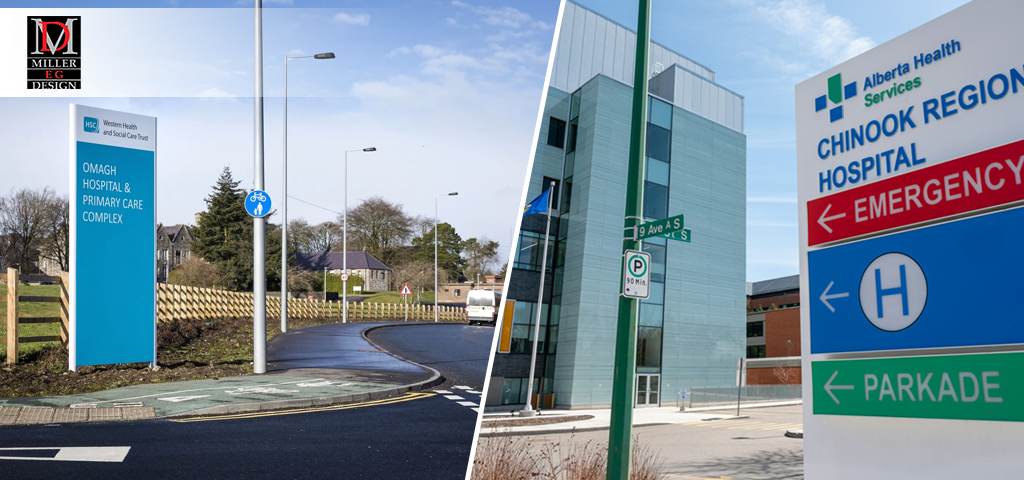
When someone is driving toward a hospital—often stressed, uncertain, and searching for clarity—every second counts. A single unclear sign can create confusion, delay care, and elevate anxiety. That’s why modern wayfinding must begin long before a visitor reaches the front doors. At Miller EG Design, we understand that effective navigation starts miles away, extending from highway signage to indoor directional systems that guide patients, families, and staff with confidence and ease.
Why Highway-to-Hospital Wayfinding Matters
Hospitals are among the most complex public environments. Large campuses, multiple buildings, urgent care points, parking decks, and specialty wings can overwhelm even local visitors. When highway signage is disconnected from internal hospital navigation, confusion becomes inevitable.
Integrated highway-to-hospital wayfinding solves this by creating a seamless, predictable path of communication. Visitors begin receiving navigational cues early—on the highway—setting expectations and reducing cognitive load once they reach the campus. This consistent experience enhances safety and efficiency while supporting the overall brand identity of the healthcare provider.
Consistency: The Foundation of Better Navigation
Consistency is the thread that ties together every stage of the wayfinding journey. Highway signs, campus markers, parking indicators, entrance identifiers, and interior wayfinding should share a unified visual language. This includes color palettes, typography, icons, and message hierarchy.
When a visitor can intuitively follow familiar design elements from one phase to the next, their stress decreases, and their ability to make decisions improves. At scale, this contributes to smoother traffic flow, fewer missed turns, and reduced bottlenecks at main entrances.
Connecting Outdoor and Indoor Navigation
Bridging highway signage to hospital interiors requires more than simply matching fonts. It demands a strategic wayfinding plan—one that considers the user’s mindset, the complexity of the campus, and the architectural environment.
Key strategies include:
1. Aligning Terminology
Ensure that the wording used on highway signs matches the terminology used throughout the campus. If the highway sign says “Main Entrance,” interior and exterior signage should avoid terms like “Lobby A” or “Front Desk” unless paired consistently.
2. Establishing Predictable Routes
A visitor’s path should feel intuitive. Clear roadway signage leading directly to parking decks, emergency entrances, and patient drop-off areas creates a predictable arrival experience.
3. Using Clear Visual Hierarchy
Color-coding, icon-based systems, and modular signage structures help visitors quickly identify their next step. This visual hierarchy must stay consistent from the roadway to the reception desk.
4. Incorporating Digital Wayfinding
For hospitals using digital directories or mobile-friendly maps, ensuring alignment with outdoor signage reinforces a cohesive experience. Digital guidance can fill in gaps, helping visitors transition from macro-navigation (roads) to micro-navigation (specific rooms or departments).
Improving Safety Through Better Wayfinding
Safety is one of the strongest reasons to integrate highway-to-hospital signage. When drivers can anticipate turns, entrances, and traffic patterns, they make better decisions under pressure. Clear external signage reduces sudden lane changes, wrong turns, and last-minute braking—all of which can create hazardous conditions.
Similarly, once on campus, clear parking identification and streamlined pedestrian pathways reduce accidents and congestion. Inside the hospital, purposeful wayfinding decreases foot traffic in restricted or clinical areas, supporting patient privacy and operational safety.
The Role of Professional Design in Seamless Navigation
Creating a cohesive, multi-stage wayfinding system requires specialized expertise. At Miller EG Design, our team ensures that every sign—from large-format roadway markers to interior directories—functions as part of a unified ecosystem. Our thoughtfully designed communication strategies elevate user experience, support operational efficiency, and reflect the identity of the healthcare organization.
By combining environmental design, strategic planning, and strong brand alignment, we help hospitals create navigational systems that feel effortless to follow while working hard behind the scenes.
Partner With Miller EG Design for Stronger Wayfinding Systems
Effective wayfinding is not an afterthought—it’s an essential part of how hospitals serve their communities. Miller EG Design is committed to building intuitive, compassionate navigation systems that guide visitors clearly and calmly from the highway all the way to their destination inside the facility.
To learn how we can support your next wayfinding project, visit us at 315 Northpoint Pkwy SE, Suite F, Acworth, GA 30102, or call (404) 947-6448. Explore more about our services in Acworth Wayfinding Design Services.
#wayfinding #hospitalwayfinding #healthcaredesign #environmentalgraphics #signagedesign #patientexperience #millerEGdesign