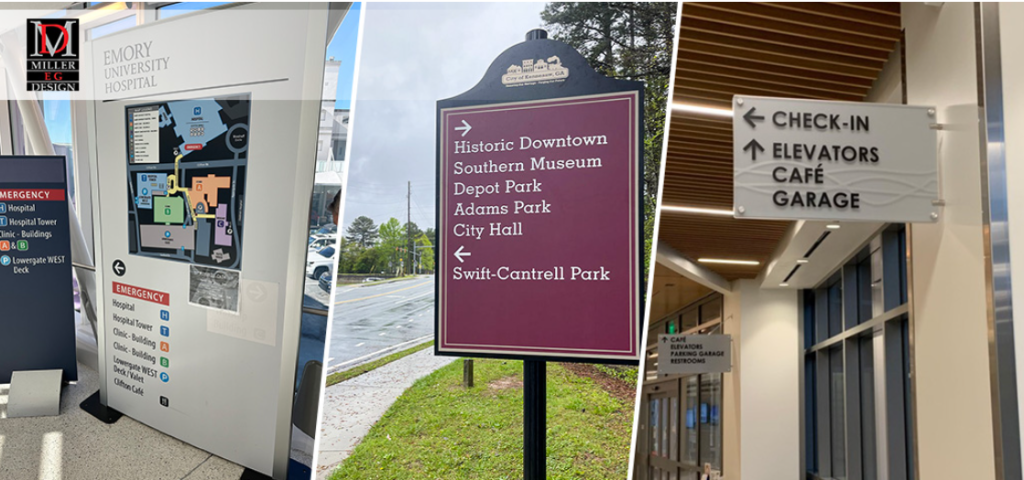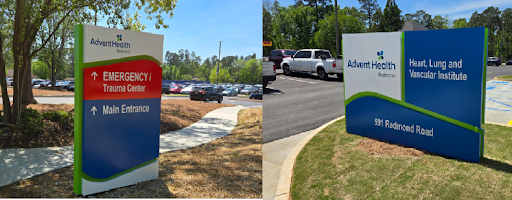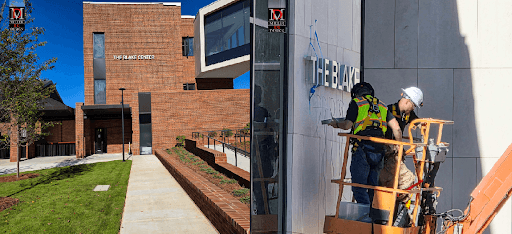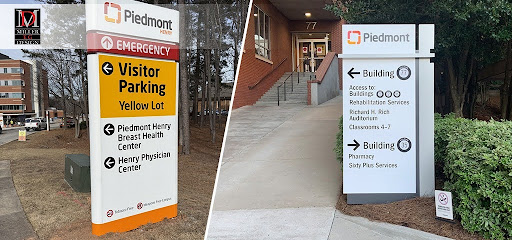
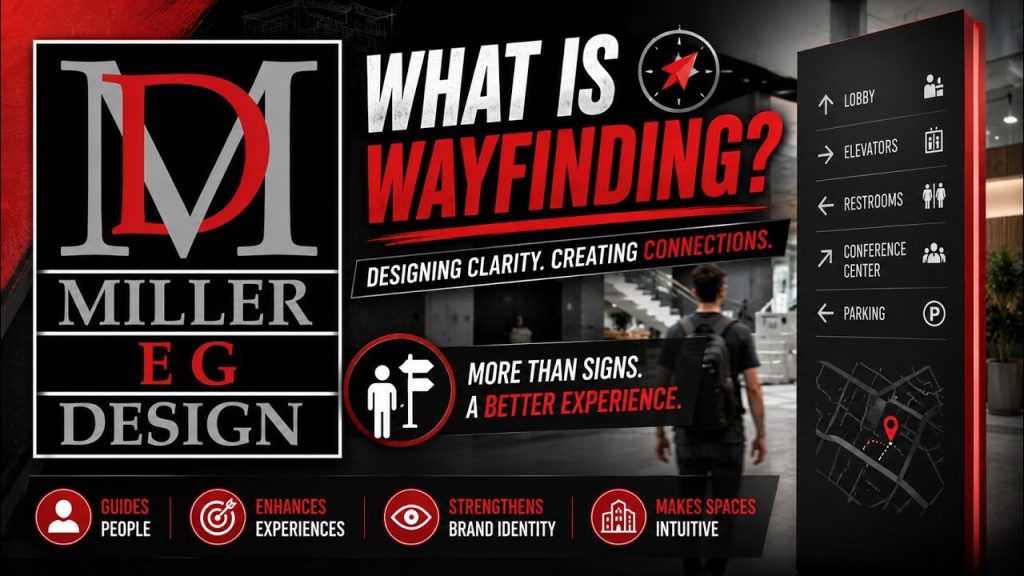
Wayfinding is much more than putting up signs and arrows. It is the process of helping people understand where they are, where they need to go, and how to get there confidently. Effective wayfinding design combines signage, visual communication, architecture, interior design, and spatial planning to create environments that are easier and more enjoyable to navigate.
For hospitals, healthcare facilities, campuses, public spaces, commercial buildings, and other complex environments, thoughtful wayfinding can reduce confusion, anxiety, and frustration while improving the overall experience.
What Is Wayfinding?
The concept of wayfinding has roots in urban planning and environmental design. The term was introduced by architect and urban planner Kevin Lynch in his 1960 book The Image of the City. Lynch described how people understand and mentally organize their surroundings using environmental cues.
Rather than thinking of wayfinding simply as signs, this approach considers how people create mental maps of a physical environment. Lynch identified five important elements that influence how people understand and navigate spaces:
- Paths – Routes people use to move through an environment.
- Edges – Boundaries that separate or define areas.
- Districts – Larger areas with recognizable characteristics.
- Nodes – Important points where people make decisions or change direction.
- Landmarks – Distinctive features that help people recognize where they are.
Together, these elements help people understand their surroundings and make decisions about where to go next.
Why Does Wayfinding Matter?
Good wayfinding can make an environment feel intuitive. Instead of constantly stopping to ask for directions or wondering whether they are heading toward the right destination, visitors can move through a space with greater confidence.
This is particularly important in healthcare environments.
A patient arriving at a hospital may already be experiencing stress or anxiety. They may need to find registration, an imaging department, a particular floor, or a physician’s office within a limited amount of time. If the building is difficult to navigate, that confusion can add unnecessary stress to the experience.
Effective wayfinding helps create a more seamless journey from the moment someone enters a property until they reach their destination.
Wayfinding Can Also Be a Matter of Safety
The importance of wayfinding becomes even clearer when considering emergencies.
The 1946 Winecoff Hotel fire in Atlanta is one tragic example of how building navigation and emergency egress can have devastating consequences. Approximately 119 people died in the fire, making it one of the deadliest hotel fires in U.S. history.
Today, building codes and life-safety requirements provide much stronger guidance for emergency exits, signage, maps, and evacuation information. Clearly identified exits and other safety-related visual cues are essential components of navigating a building during an emergency.
This illustrates an important point: wayfinding isn’t simply about convenience. In certain environments, it can contribute to safety.
Wayfinding Goes Beyond Signs
Signs are an important part of wayfinding, but they are only one component of the overall experience.
Successful wayfinding considers how signage interacts with the physical environment. Directional information needs to appear at the right locations, be easy to understand, and provide people with the information they need before they reach a decision point.
This is where experiential graphics can play an important role.
Experiential graphics combine graphic design with architecture and interior design to communicate information while also influencing how people experience a space. Graphics can identify locations, reinforce a brand, establish visual landmarks, and transform an otherwise ordinary environment.
The result is an environment that communicates with people rather than simply placing information on walls.
How Experiential Graphics Can Transform a Space
Wayfinding design can also turn functional spaces into memorable experiences.
For example, an otherwise dark and sterile pedestrian tunnel can be transformed through graphics, color, lighting, and other environmental elements. Instead of feeling like an uncomfortable passageway between two destinations, the space can become an engaging part of the journey.
One example discussed by Miller EG Design involves transforming a plain tunnel beneath a roadway into an immersive forest-inspired environment. Greens, blues, and nature-inspired graphics create a completely different atmosphere.
The experience can even incorporate sound. Sensors can trigger the sounds of birds and a forest as people move through the space.
This type of design demonstrates an important principle of experiential graphics: the journey itself can become part of the experience.
Instead of simply moving from Point A to Point B, people can interact with and enjoy the environment along the way.
What Makes Better Wayfinding Design?
Creating effective wayfinding starts with understanding the people who will use the environment.
A successful project considers questions such as:
- Who will use the space?
- Where are visitors entering?
- What destinations do they need to reach?
- Where will they need to make navigation decisions?
- What information do they need at each point?
- Are signs visible and understandable?
- Are there accessibility considerations?
- How can graphics reinforce the identity of the space?
- How can the environment reduce confusion and anxiety?
The process should begin with the goals of the project and the needs of the people using the space. From there, planning, design, fabrication, and installation can work together to create a cohesive wayfinding system.
Creating Better Experiences Through Wayfinding
At its core, wayfinding is about connecting people to places.
Whether someone is visiting a healthcare facility, navigating a campus, walking through a public space, or moving through a commercial property, the environment should provide the visual and spatial information they need to feel confident about where they are going.
Miller EG Design approaches wayfinding as more than a signage project. Through experiential graphics, signage, environmental design, and immersive elements, the goal is to create spaces that inform, guide, and enhance the experience of the people using them.
For professional wayfinding design and experiential graphics, contact Miller EG Design, located at 315 Northpoint Pkwy SE Suite F, Acworth, GA 30102, at (404) 947-6448 to discuss how better wayfinding can improve your environment and help people confidently find their way.